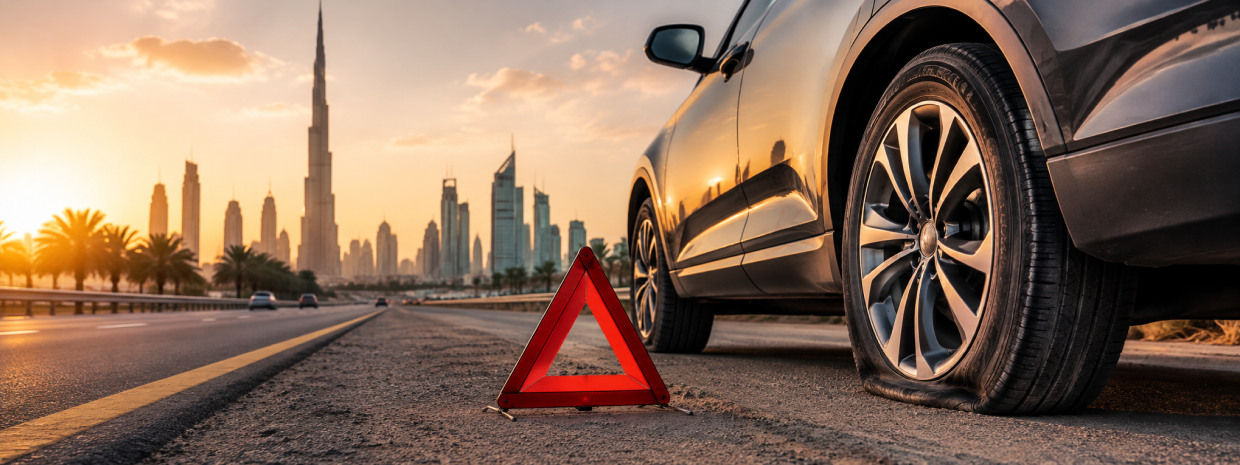
In Dubai, the weather gets extremely hot. Because of intense heat, vehicle tires often get flat or blow out. There can be many factors behind a flat or tyre blowout, but during that time, there are a few steps we should know so we can keep ourselves and our passengers safe. If such an issue comes up, we should follow the steps explained below. This will guide us and be the best choice for us in that situation
Identify the Difference?
A flat tyre and a blowout are not the same thing. Knowing the difference helps you respond correctly.
What Is a Flat Tyre?
A slow loss of air pressure is usually caused by a hole, a problem with the valve, or an issue with the edge of the tyre. It might be fixable.
When tyre air pressure is low, the tyre’s contact with the road gets affected. Long driving in this condition puts extra stress on the tyre; it can damage the tyre sidewall and even the rim.
What Is a Tyre Blowout?
A blowout is when a tyre fails quickly. You might hear a bang and feel strong vibrations. The vehicle could pull to one side. Become hard to steer.
Knowing what to do during a blowout is important because panic can lead to braking or sharp steering. Keep the vehicle steady. Let the speed decrease slowly.
What Causes Tyres and Blowouts in Dubai?
Several everyday issues can cause tyre failure. Dubai’s heat and road conditions make these problems worse.
Extreme Heat and Road Conditions
High temperatures can make small tyre weaknesses more serious. Long highway trips build up heat inside the tyre, especially if pressure or condition isn’t right.
Road debris is another concern. Nails, screws, potholes, and sharp objects can damage the tyre. Some damage stays hidden until the tyre loses pressure or fails later.
Worn or Damaged Tyres
Cracks, cuts, bulges, and uneven tread wear are signs of damage. Worn tread reduces grip and affects how the vehicle handles.
Old tyres also need attention. If a tyre keeps losing air or shows damage, don’t just add air and keep going. Get an inspection.
Incorrect. Heavy Loads
Correct tyre pressure helps the tyre support the vehicle safely. Low pressure increases flexing and heat. Too much pressure reduces road contact and handling.
Every vehicle has a specific load capacity set by the manufacturer; we should only carry the recommended amount of luggage and passengers.
Warning Signs of a Tyre Problem While Driving
Learning signs of a tyre issue can help you act before things get worse.
Changes in Steering and Handling
If your car pulls to one side or the steering feels heavy. You struggle to keep straight, take it seriously. It may point to a tyre, wheel, or suspension issue.
Unusual Sounds, Vibrations or Smells
A thumping or flapping noise suggests tyre trouble. Strong vibrations can be a sign of damage. A smell of burning rubber is another flag.
TPMS Warning Light
The TPMS light means one or more tyres have low pressure. Check the pressure when you reach a place.
If the tyre keeps losing air or has damage, get a professional inspection. Don’t trust the dashboard warning to decide if the tyre is safe.
What to Do During a Tyre Blowout on a Dubai Road
When a blowout happens, keeping control of the vehicle should be your goal. This calm response improves safety on Dubai’s highways.
Keep Both Hands on the Steering Wheel
Hold the steering wheel firmly. Avoid movements. Don’t swing into another lane fast.
Reduce Speed
Let off the accelerator slowly. Let the vehicle slow down naturally. Only brake hard if there’s danger.
Turn on Hazard Lights
If safe, turn on hazard lights. This helps other drivers see you clearly while you deal with the emergency.
Move to a Safe Area
When traffic allows, move to a spot away from moving vehicles. Don’t cross lanes just to reach the shoulder.
How to Safely Pull Over After a Tyre Problem
Knowing how to pull over after a tyre issue lowers the chance of another accident. Always check mirrors and surrounding traffic first.
Assess Traffic Conditions
Before changing direction, watch traffic carefully. Use your turn signals. Move slowly when a safe gap appears.
Stay Inside the Vehicle When Necessary
If your vehicle stops in a place, stay inside with your seat belt fastened. Being inside offers more protection than stepping out near traffic.
Should You Change a Flat Tyre Yourself in Dubai?
An emergency tyre change may work only if the vehicle is parked far from moving cars on the road. You also need the spare tyre, jack, and lug wrench.
When a DIY Tyre Change May Be Safe
Changing a tyre is safer when there is enough space and the vehicle is securely positioned. Always follow the manufacturer’s instructions when using the jack.
When Professional Help Is Better
Avoid changing a tyre on high-speed roads, blind curves, or narrow shoulders. There’s danger from passing cars as well as the repair itself.
A professional service can provide roadside assistance. Inspect the wheel for more damage. This is often safer than working beside traffic.
When Should You Call Mobile Tyre Assistance in Dubai?
Professional help is usually the choice if your vehicle is stopped in a risky place or the tyre is badly damaged.
You Don’t Have the Right Equipment
Without a spare, jack, or lug wrench, a fix on the roadside isn’t possible. Using tools can create new risks.
In this case, call roadside assistance. Say what equipment you have. A technician will bring the tools to handle the situation.
The Tyre or Wheel Has Serious Damage
A torn sidewall, large puncture, exposed cords, or a bent wheel needs judgment. Adding air won’t fix damage.
A technician can decide if the tyre needs repair, replacement, or vehicle recovery. This matters after a blowout or a hard impact.
How to Prevent Flat Tyres and Blowouts in the UAE
There are many steps that you should follow to keep secure from flat tyres or tyre blowouts in Dubai.
Check Tyre Pressure Regularly
Use the pressure listed on the door label or in your owner’s manual. Check tyres when they are cold before driving or after sitting for hours.
Regular checks catch pressure loss early. Don’t rely on how the tyre looks; underinflated tyres can seem normal but still pose a risk.
Inspect Tread and Sidewalls
During inspections, look for cracks, cuts, bulges, punctures, and uneven wear. Check both the tread and the sides of the tyre.
Get an inspection if you notice repeated pressure drops, strange vibrations, or visible damage. Early action prevents tyre failures.
Replace Tyres on Time
Follow the manufacturer’s advice for tyre rotation, alignment and replacement. Good maintenance helps tyres wear evenly and drive better.
Don’t wait until a blowout happens to replace a tyre. Proper care and regular checks reduce the chance of problems on the road.
Conclusion
Keeping all of this in mind, the first thing we should note is the difference between a flat tyre and a tyre blowout. Next, we should look at the reasons behind flats or tyre blowouts, and why they happen so often in Dubai. If such a thing does happen, what are the specific signs while driving that should raise concern? And if such a thing really happens, how should we stay calm, and how should we proceed? If you really need expert assistance, how can you seek it, how does CarTow help us, and how can we stop it from occurring in the future?
FAQs
What to do if you experience a tyre blowout?
Stay calm, hold the steering wheel firmly, ease off the accelerator, and avoid sudden braking. Slow down gradually and pull over when it is safe.
How can I prevent a tyre blowout in Dubai?
Check tyre pressure regularly, inspect for damage, maintain good tread, avoid overloading, and replace old or worn tyres on time.
Can a blown tyre be repaired?
In cases where a tyre has been, or appears to have been, excessively punctured or is bursting, it will almost certainly require changing, rather than plugging or repairing. One should always have it checked by an expert.
Can I drive after a tyre blowout?
No, avoid driving on a blown tyre. If necessary, move only a very short distance to reach a safer location, then call for assistance.